
OK, first day of September. School starts. Maggie Jane is in second grade. We have our 60th high school reunion in a very different Highland Park, IL.
And for me and our fellow video explorers, it’s the premiere of a TV show. Saturday Night Special on our streaming channel, imageunion.tv. You can see it on imageunion.tv at 9 pm Central (10 ET. 7 PT) on September 10. It’s the centerpiece of our 24/7 digital platform, IMAGEUNION.TV for a worldwide audience that wants something new, even if they don’t know it beforehand. Did anyone know that they wanted All in the Family before it was on the air? Or “platforms” like CNN, ESPN or MTV (when we were young?). No. But when we saw it, we knew it was something new that mattered for us to put on our screens.

Millions of us are sick and tired of the commercialized exploitative stuff we constantly get on our screens. The digital world isn’t quite the same as it was when Paddy Chayefsky wrote the Howard Beale character in the increasingly prophetic 1976 movie Network. But what we’re doing is inspired in part by it. Remember?
I don’t have to tell you things are bad. Everybody knows things are bad. It’s a depression. Everybody’s out of work or scared of losing their job. The dollar buys a nickel’s worth. Banks are going bust. Shopkeepers keep a gun under the counter. Punks are running wild in the street and there’s nobody anywhere who seems to know what to do, and there’s no end to it. We know the air is unfit to breathe and our food is unfit to eat, and we sit watching our TVs while some local newscaster tells us that today we had fifteen homicides and sixty-three violent crimes, as if that’s the way it’s supposed to be.
…We sit in the house, and slowly the world we are living in is getting smaller, and all we say is: ‘Please, at least leave us alone in our living rooms. Let me have my toaster and my TV and my steel-belted radials and I won’t say anything. Just leave us alone.
Well, I’m not gonna leave you alone. I want you to get MAD! I don’t want you to protest. I don’t want you to riot – I don’t want you to write to your congressman, because I wouldn’t know what to tell you to write. I don’t know what to do about the depression and the inflation and the Russians and the crime in the street. All I know is that first you’ve got to get mad. (shouting) You’ve got to say: ‘I’m a human being, god-dammit! My life has value!
So, I want you to get up now. I want all of you to get up out of your chairs. I want you to get up right now and go to the window. Open it, and stick your head out, and yell: ‘I’m as mad as hell, and I’m not gonna take this anymore!
Things have got to change. But first, you’ve gotta get mad!…You’ve got to say, ‘I’m as mad as hell, and I’m not gonna take this anymore!’ Then we’ll figure out what to do about the depression and the inflation and the oil crisis. But first, get up out of your chairs, open the window, stick your head out, and yell, and say it: ‘I’m as mad as hell, and I’m not gonna take this anymore!
Nowadays, the TV and social networks are littered with clickbait, driven by ratings and selling stuff, all to keep us reading and scrolling. It’s changing the definitions of democracy and capitalism every day. Elections and governments are determined in large part by who has the most money and the businesses that financed their campaigns rather than educated choices by the voters they are representing.
I apologize for going off on that tangent, but the driving force for our new platform is to forge new ground…to work for change, to open eyes with documentaries, adult animation and a few live shows you won’t see anywhere else. And we address topics like weed, alcohol, sexual (not porn) videos, and kids in ways you won’t see consistently just about anywhere else. The creators and the faces range from 20 to 80.
Saturday Night Special is also the first time in over 50 years of tv/video producing that I’m out from behind the camera and hanging out with interesting people at my long-time watering hole, the Billy Goat Tavern under Michigan Avenue in Chicago. Really, it’s a live TV party, inspired by Kup’s Show (“The lively Art of Conversation”), Jack Eigen from the Chez Paree lounge, and the early years of Hugh Hefner’s playhouse. Sprinkled in, some Studs Terkel and even Larry King. Maybe it will work…a few generations have no idea about that ancient media history.
But, we’re hoping they will identify with the innovative short videos we play and stay tuned our callers from all over the world via cell phone.
As for our team of young and eager producing group, we’re living the lyrics of South Pacific:
Happy talk, keep talkin’ happy talk,
Talk about things you’d like to do.
You got to have a dream,
If you don’t have a dream,
How you gonna have a dream come true?
What About College Loans?
With Biden’s student loan forgiveness, your loan burden is reduced. It’s a relief to have part of the long-term monkey off your back.
But wait…there’s more!
How and why did the government become a bank for lending money for college tuition?
I’ve always taught students to ask “Whose interest does it serve?” in politics, business, and media. It’s a good litmus test for what appears to be “progress.”
In the case of student loans and forgiveness, the benefits are theoretically given to the people who got the loans so they could be in a position to earn more money when they get jobs than they would have without the loan. The theory has holes in it. One writer who has consistently written about holes in the systems and government is William Rivers Pitt. He has written several books including War on Iraq: What Team Bush Doesn’t Want You to Know; Our Flag, Too: The Paradox of Patriotism; and House of Ill Repute: Reflections on War, Lies, and America’s Ravaged Reputation, You can start to see where he’s coming from. Here’s his take on the broader societal context of student loans:
…How do you get the smartest students in the country to work defending the rights and power of corporations? Bury them in debt and then lure them into six-figure careers — perhaps a partnership, or even a judge’s robe down the road — spent defending those corporations in court. So long as these students are shackled to debt, torrents of them will be available to make sure oil companies will never know a reckoning for, say, turning the Gulf of Mexico into a death zone. This frees up money for the corporations to buy politicians who bring things like Citizens United to life, and the wheel goes round.
–William Rivers Pitt, from Truthout, August 2022
It’s the Internet, Stupid
Last month I included a lift from the book I have been writing and revising for about five decades. In the early 2000s, I used it as a text for classes I was teaching Media and Society, and Video: From Portapaks to YouTube. The book is called Media Burn: Screens and What They’re Doing to Us. Your responses were encouraging. So, here’s another lift from the book. This one is about video on the Internet and how that has changed over the years.

What About Video Now? It’s the Internet, Stupid!
Online Video: Born in 2003…Hard to believe. But, true. What made it possible?
- Ordinary personal computers got enough capacity to play video, very slowly at first.
- The internet bandwidth got big enough to send video.
- The systems and protocols for sending and receiving video were standardized.
- Companies spent huge bucks developing streaming capacity and content.
“In the YouTube era, everyone will be famous to fifteen people.” NYT, April 2016

YouTube grew faster and bigger than any other content site in history. Three former PayPal employees created YouTube in February 2005. Its first headquarters was above a pizzeria and Japanese restaurant in San Mateo, California. In 2006, the company was bought by Google Inc. for $1.65 Billion in Google stock. On October 9, 2009, the third anniversary of the acquisition by Google, co-founder Chad Hurley announced in a blog posting that YouTube was serving “well over a billion views a day” worldwide…far exceeding the usage of the entire internet in 2000. In 2020, YouTube is still bigger than all the other social media platforms. (And every other website, too, except for Google.)
In my lifetime, we have gone from a “Television Society” to a “YouTube Era.” It is a genuinely new media world. As for independent film and video, we’re just starting to understand what it means and will mean.
The first obvious result is that people all over the world can see any videos that are online. We live int he Global Village that Marshall McLuhan prophesied in the 1960’s.
The new electronic interdependence recreates the world in the image of a global village.
–Marshall McLuhan, “Gutenberg Galaxy”, 1962
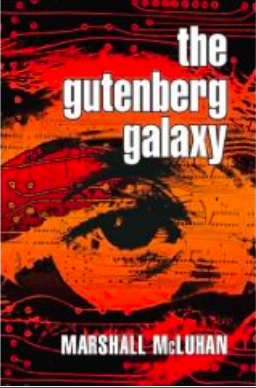
McLuhan was the guy who told everyone what it was going to be. He was a distinguished Canadian professor and intellectual who wrote several hugely influential books and became a guru for the advertising industry, the Mad Men of the 1960s and ’70s.
He died in 1980. He never saw the internet, except in his futuristic mind.He never saw how time-shifting developed–reel to reel, then Tivo, DVR, built-in digital video, and VOD. McLuhan in the 1970s told anyone who´d listen, “Instant replay was probably the most revolutionary change in the 20th century.” .
But, of course, he never saw online video, probably the biggest change of the next generation. Every day, more millions of videos are just there, ready for everyone to go to, 24/7 online. In July, 2022, YouTube had 2.6 Billion video views and only 15% were in the USA.
Is it really a major change? Why isn’t it the same to watch a few episodes of a series or to replay what you recorded yesterday or six months ago? It’s still “TV”…still watching what’s happening through the powerful screen. And watching video online is still watching a screen.
Advertisers and agencies were early believers in the internet. They responded more quickly and spent a higher percentage of their ad dollars online sooner than the audience numbers changed. In 2011, more than $30 Billion was spent for online advertising. TV ad revenues were $88 billion, nearly three times as much. But, as of August2022, TV revenues were down to $68 billion. Online advertising revenues and online advertising have overtaken TV.
Look at the growth in 2011 the average American spent twice as much time using traditional media–TV, radio, newspapers, etc.—than on digital. By 2022, that completely reversed—nearly twice as many hours were spent on digital media.
A big chunk of that time is spent watching video that historically would have been on TV, but the effects of that are for another time-place.

McLuhan also understood that paradigm changes don’t happen in one night. We constantly perceive the world we’re living in and the world we’re going to through the lens of what we used to know and do. That’s the gist of his Rear View Mirror concept:
We look at the present through a rear-view mirror.
We march backwards into the future.
—Marshall McLuhan,The Medium is the Massage, Bantam Books, 1967
Rear-view mirror or not, TV has not rolled over and died. According to the A.C. Nielsen Co., the average American watches more than 4 hours of TV each day (or 28 hours/week, or 2 months of nonstop TV-watching per year).
That is less than the five hours watching TV ten years ago, but it´s still what people do and how politicians, cars, and deodorant are sold.
In the US, the screens are on more than anywhere in the world… Americans spend 4 million years online every month.
A couple other assertions from Nielsen and other reliable sources–
- there are more TV’s in American homes than there are people. (2.5 people vs. 2.9 TV’s per home).
- Adults 18-24 watch video online five times as much as people over 60. No question where the trend is going. But, it has only just begun on a wide scale…we’re definitely not there yet.
- the heaviest TV watchers by far are people over the age of 65. But everybody, even if they don´t have a TV set, watches TV shows.
- short-form video (primarily YouTube) accounts for 83% of online video viewing.
- Mobile video viewing increased faster than any other format ever. In 2022, almost 80% of YouTube viewers watch it on their phones.
- laying games is the most popular single category of entertainment—1.5 hours a day for women and almost three hours every day for men.
So, what’s genuinely new about “new media?”
Millions of people have free access to millions of videos 24/7.
That has only been possible for 17 years.
90% of US homes broadband internet service.. This is far less penetration than many countries in Europe: Finland, Norway, Sweden and Denmark, and Japan. And the service is generally faster and better.
As in most fields, China is the biggest factor in the world, with more than a billion internet users.
In the US, about 300 million are online users. iWe represent only 9% of Internet users in the world. We tend to be insular about media and politics, but the world is far more wired than we generally think.
What this means for video, television, producers of programming, distributors of content, and business applications must be factored into all decisions. That’s where the market will be.

copyright, 2022, Tom Weinberg. Attribute but please don´t steal it.
No-Go, Joe?
Maureen Dowd did an opinion piece in the Times the other day about how it might be best if Biden didn’t run for reelection in 2024 because Dems want new blood and despite his legislative successes recently, he will be vulnerable to attacks by the likes of Trump or God-forbid DeSantis. Plus, he’ll be 83 on Inauguration Day, 2025.
My friend and mentor Don Rose, senior Chicago Progressive Democratic strategist, commentator, and prize-winning blogger, has been around for more than 20 presidential elections. In last week’s piece, Don wrote about who he thinks would be the best progressive Presidential candidate for 2024: Congressman Jamie Raskin.
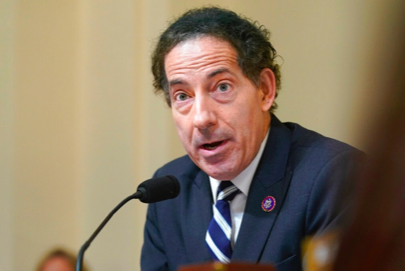
The case Don makes for Raskin:
The most impressive “new” figure I have seen rise on the Democratic side during the Trump era is US Rep. Jamie Raskin, now serving his third term in Maryland’s 8th District (suburban Washington). For a three-termer about to turn 60, Raskin has been placed in a couple of ultra high-profile leadership positions reflecting the respect Nancy Pelosi and his colleagues have for him.
Needless to say, he has excelled in executing those roles—first as lead impeachment manager in Donald Trump’s second impeachment hearing and currently on the January 6 Select Committee where he has been the outstanding Democratic “investigator.” He is credited with drafting the second impeachment bill—a tribute to his 25-year career as a professor of constitutional law at the American University Washington College of Law. He graduated with all sorts of honors from Harvard and Harvard Law and was elected to the Maryland State Senate at age 44, serving eight years with a reputation for being able to work across the aisle despite being its most liberal member.
He is one of the most progressive—and I would add smartest—members of the Congress, without yet becoming a hated target of the right the way AOC and Adam Schiff are. (That will happen soon enough.)
Before continuing I want to note that I am not here dissing any of the other potential candidates such as the media favorites Senators Amy Klobuchar and Cory Booker or Transportation Secretary Pete Buttigieg, any of which I could support wholeheartedly along with Joe Biden should any of them become the nominee. I would say, however, that based on everything we have seen and heard to date, he would be the overwhelming favorite in any debate with Trump, Ron DeSantis or anyone else the GQP might dredge up.
I should add he has one of the best sociopolitical pedigrees I know of. His father was Marc Raskin, a leading intellectual of the left who worked in the Kennedy Administration, cofounded a progressive think-tank, the Institute for Policy Studies, and was a major player in releasing the Pentagon Papers to the public; mother Barbara Bellman Raskin was a novelist and journalist. (I had the honor of working on projects with both parents many years ago but never met Jamie.)
He has become somewhat of a media favorite himself, frequently appearing on cable news as well as mainstream shows such as Steven Colbert’s. MSNBC, in fact, honored him with an hour-long biographical documentary “Love & the Constitution.”
His wife, Sarah Bloom Raskin, is an attorney, a former Undersecretary of the Treasury under Barack Obama and former member of the Federal Reserve Board. They have two daughters but lost a son Tom to depression and suicide at age 25—right before Jan. 6.
Among his other positions in this session of Congress he is senior whip of the House Democratic Caucus, Vice Chair of the Progressive Caucus, member of the LGBT Equality Caucus and the Pro-Choice Caucus. Clearly a high achiever and good campaigner.
We will be seeing a lot of him in action in the coming months, well after the midterms. He has not yet emerged publicly as a potential presidential candidate, but it could happen soon. I don’t think anyone has gone straight from congressman to be elected president, nor has any Jewish guy ever been nominated. That would be a couple of interesting firsts
A Gaggle of Grands
With six grandkids within about a half hour, it seems like there’s a family event every other weekend.
This month, Otis will be three months, Rocco is ten months, Charlie is four, Oliver is six, Maggie Jane is eight, and Eliza will celebrate her fourth tomorrow.
Here they are:
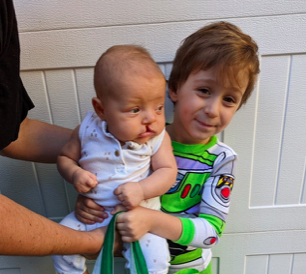
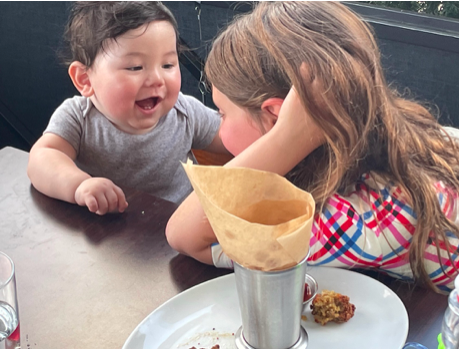

We’re blessed in so many ways. Have a fun Labor Day and a healthy September. Seeya October 1.
And please let me know your thoughts about this letter and the TV show(s) on imageunion.tv.
tom
 PY-O-MY